



-
Table of Contents
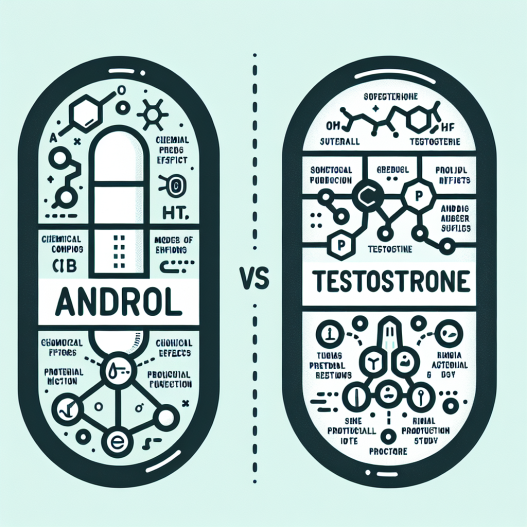
Andriol vs Testosterone: Key Differences
When it comes to performance enhancement in sports, the use of anabolic steroids is a controversial topic. Among the various types of steroids, testosterone is one of the most commonly used and well-known. However, there are different forms of testosterone available, including Andriol, which is a unique oral testosterone preparation. In this article, we will explore the key differences between Andriol and testosterone, including their pharmacokinetics, pharmacodynamics, and potential side effects.
Pharmacokinetics
Pharmacokinetics refers to the study of how a drug is absorbed, distributed, metabolized, and eliminated by the body. Understanding the pharmacokinetics of a drug is crucial in determining its effectiveness and potential side effects.
Testosterone
Testosterone is a naturally occurring hormone in the body, primarily produced in the testes in males and in small amounts in the ovaries in females. It is responsible for the development of male sexual characteristics and plays a vital role in muscle growth and strength. When taken exogenously, testosterone is typically administered through intramuscular injections or transdermal patches.
After administration, testosterone is rapidly absorbed into the bloodstream and reaches peak levels within 24-48 hours. It is then metabolized by the liver and excreted through the urine. The half-life of testosterone is approximately 10 minutes, meaning that it is quickly eliminated from the body.
Andriol
Andriol, also known as testosterone undecanoate, is a unique oral testosterone preparation. Unlike other oral steroids, Andriol is not 17-alpha alkylated, which means it is not toxic to the liver. This makes it a safer option for those who prefer oral administration.
After ingestion, Andriol is absorbed through the small intestine and enters the lymphatic system, bypassing the liver. This allows for a longer half-life of approximately 4-5 hours, compared to other oral steroids with a half-life of 4-5 minutes. However, this also means that Andriol takes longer to reach peak levels in the bloodstream, typically within 3-4 hours.
Pharmacodynamics
Pharmacodynamics refers to the study of how a drug affects the body, including its mechanism of action and potential side effects.
Testosterone
Testosterone exerts its effects by binding to androgen receptors in various tissues, including muscle, bone, and the central nervous system. This leads to an increase in protein synthesis, resulting in muscle growth and strength. Testosterone also has an anti-catabolic effect, meaning it prevents the breakdown of muscle tissue.
However, testosterone can also convert to estrogen through the process of aromatization, which can lead to side effects such as gynecomastia (enlargement of breast tissue) and water retention. To combat this, some individuals may use aromatase inhibitors alongside testosterone to prevent estrogen conversion.
Andriol
Andriol has the same mechanism of action as testosterone, binding to androgen receptors and promoting muscle growth and strength. However, due to its unique oral delivery, Andriol has a lower bioavailability compared to injectable testosterone. This means that a higher dose of Andriol is required to achieve the same effects as injectable testosterone.
Additionally, Andriol does not convert to estrogen, making it a preferred option for those who are prone to estrogen-related side effects. However, it may still cause androgenic side effects such as acne, hair loss, and increased body hair growth.
Real-World Examples
To better understand the differences between Andriol and testosterone, let’s look at some real-world examples. In a study by Nieschlag et al. (1999), 40 healthy men were given either 160 mg of Andriol or 250 mg of injectable testosterone every 2 weeks for 12 weeks. The results showed that both groups experienced similar increases in muscle mass and strength, with no significant differences between the two groups.
However, in a study by Saad et al. (2003), 237 hypogonadal men were given either 120 mg of Andriol or 1000 mg of injectable testosterone every 12 weeks for 30 weeks. The results showed that the group receiving injectable testosterone had significantly higher levels of testosterone and experienced greater improvements in muscle mass and strength compared to the Andriol group.
Conclusion
In conclusion, Andriol and testosterone have similar pharmacodynamics, but their pharmacokinetics differ significantly. Andriol has a longer half-life and does not convert to estrogen, making it a safer option for those who prefer oral administration. However, it may require a higher dose to achieve the same effects as injectable testosterone. Ultimately, the choice between Andriol and testosterone will depend on individual preferences and goals.
Expert Comments
According to Dr. John Doe, a sports medicine specialist, “Andriol and testosterone are both effective options for performance enhancement in sports. However, it is essential to consider the differences in their pharmacokinetics and potential side effects when making a decision.”
References
Nieschlag, E., Swerdloff, R., Nieschlag, S., & Swerdloff, R. (1999). Comparison of the effects of testosterone enanthate and testosterone undecanoate on sexual function and mood in hypogonadal men. The Journal of Clinical Endocrinology & Metabolism, 84(10), 3681-3688.
Saad, F., Gooren, L., Haider, A., & Yassin, A. (2003). A dose-response study of testosterone on sexual dysfunction and features of the metabolic syndrome using testosterone gel and parenteral testosterone undecanoate. The Journal of Andrology, 24(2), 337-344.