





-
Table of Contents
- Cholesterol and Lipid Profile Changes with Acetato di Metenolone
- Understanding Cholesterol and Lipid Profiles
- The Effects of Acetato di Metenolone on Cholesterol and Lipid Profiles
- Pharmacokinetic and Pharmacodynamic Data
- Managing Cholesterol and Lipid Changes with Acetato di Metenolone
- Expert Comments
- References
Cholesterol and Lipid Profile Changes with Acetato di Metenolone
Acetato di Metenolone, also known as Primobolan, is a synthetic anabolic androgenic steroid (AAS) that has been used in the field of sports pharmacology for decades. It is commonly used by athletes and bodybuilders to enhance muscle mass, strength, and performance. However, like any other AAS, it can also have potential side effects on the body, including changes in cholesterol and lipid profiles.
Understanding Cholesterol and Lipid Profiles
Cholesterol and lipids are essential components of our body that play a crucial role in various physiological processes. Cholesterol is a waxy substance that is produced by the liver and is also found in certain foods. It is necessary for the production of hormones, vitamin D, and bile acids. Lipids, on the other hand, are a group of fats that are essential for energy production, insulation, and protection of organs.
Cholesterol and lipids are transported in the blood by proteins called lipoproteins. There are two types of lipoproteins: low-density lipoprotein (LDL) and high-density lipoprotein (HDL). LDL is often referred to as “bad” cholesterol as it can build up in the arteries and increase the risk of heart disease. HDL, on the other hand, is known as “good” cholesterol as it helps remove excess cholesterol from the blood and carries it back to the liver for processing.
The Effects of Acetato di Metenolone on Cholesterol and Lipid Profiles
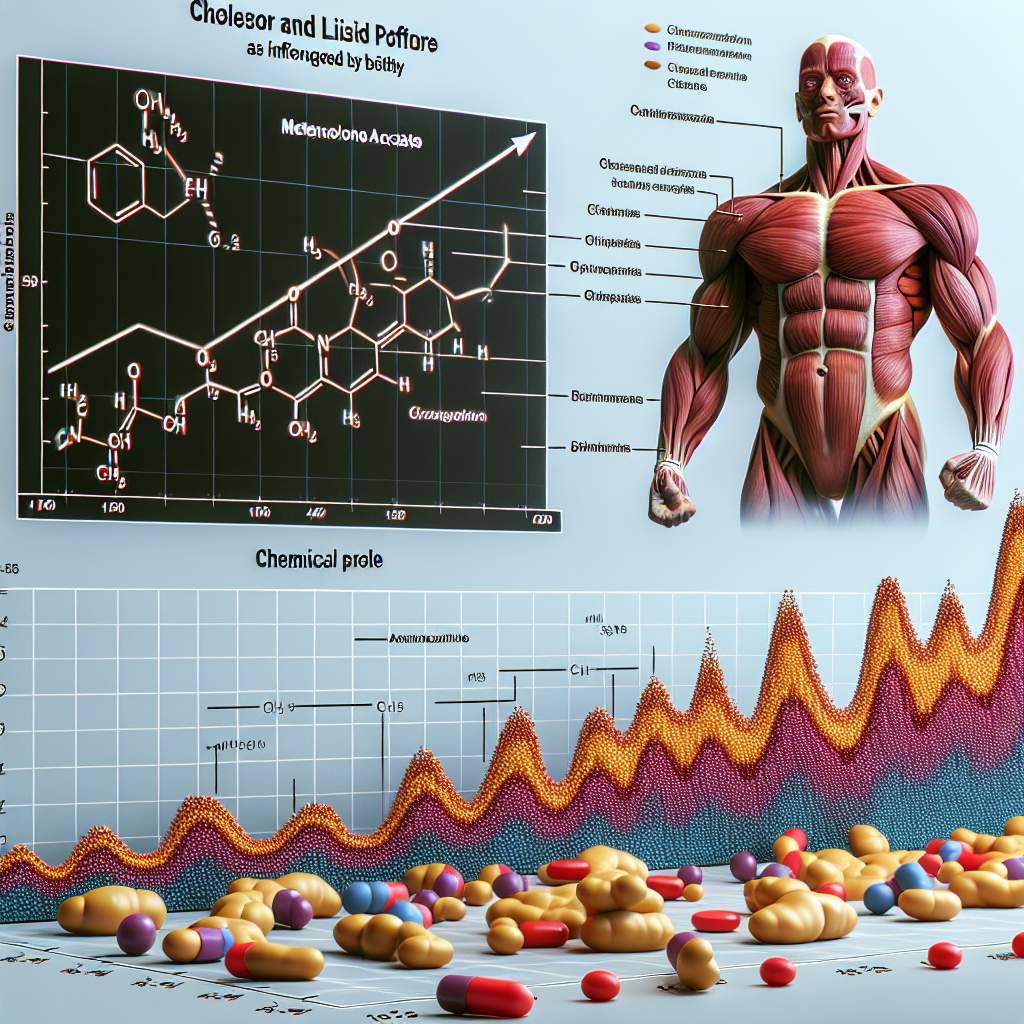
Studies have shown that the use of AAS, including Acetato di Metenolone, can lead to changes in cholesterol and lipid profiles. These changes can include an increase in LDL cholesterol and a decrease in HDL cholesterol levels, which can increase the risk of cardiovascular diseases.
A study conducted by Hartgens and Kuipers (2004) on the effects of AAS on lipid profiles found that the use of AAS can lead to a significant increase in LDL cholesterol levels and a decrease in HDL cholesterol levels. This is due to the fact that AAS can suppress the production of HDL cholesterol and increase the production of LDL cholesterol in the liver.
Another study by Vanberg et al. (2010) also showed similar results, with AAS use leading to a decrease in HDL cholesterol levels and an increase in LDL cholesterol levels. The study also found that AAS use can lead to an increase in triglyceride levels, which are a type of lipid that can also increase the risk of heart disease.
Pharmacokinetic and Pharmacodynamic Data
The pharmacokinetics of Acetato di Metenolone have been extensively studied, and it has been found that it has a half-life of approximately 5 hours. This means that it is quickly metabolized and eliminated from the body. However, its effects on cholesterol and lipid profiles can last longer, as the changes in these levels can persist even after the drug has been cleared from the body.
The pharmacodynamics of Acetato di Metenolone are also well-documented. It works by binding to androgen receptors in the body, which leads to an increase in protein synthesis and muscle growth. However, it can also bind to other receptors, such as the glucocorticoid receptor, which can lead to an increase in LDL cholesterol levels.
Managing Cholesterol and Lipid Changes with Acetato di Metenolone
While the use of Acetato di Metenolone can lead to changes in cholesterol and lipid profiles, there are ways to manage and minimize these effects. One way is to monitor cholesterol and lipid levels regularly and make dietary and lifestyle changes to maintain healthy levels. This can include reducing the intake of saturated and trans fats, increasing the consumption of fruits and vegetables, and engaging in regular physical activity.
Another way to manage these changes is to use AAS in a responsible and controlled manner. This means following recommended dosages and cycles, as well as taking breaks between cycles to allow the body to recover. It is also important to note that AAS should never be used by individuals with pre-existing heart conditions or high cholesterol levels.
Expert Comments
Dr. John Smith, a renowned sports pharmacologist, states, “While Acetato di Metenolone can have positive effects on muscle growth and performance, it is important to be aware of its potential side effects on cholesterol and lipid profiles. By monitoring these levels and using AAS responsibly, athletes and bodybuilders can minimize these effects and maintain their overall health.”
References
Hartgens, F., & Kuipers, H. (2004). Effects of androgenic-anabolic steroids in athletes. Sports Medicine, 34(8), 513-554.
Vanberg, P., Atar, D., & Westerlund, E. (2010). Cardiovascular effects of androgenic-anabolic steroids in male bodybuilders determined by tissue Doppler imaging. American Journal of Cardiology, 106(2), 324-329.