-
Table of Contents
- How Trenbolone Compresse Suppresses Natural Testosterone Production
- The Mechanism of Action of Trenbolone
- Trenbolone and Testosterone Production
- Pharmacokinetics of Trenbolone
- Pharmacodynamics of Trenbolone
- Managing Testosterone Suppression from Trenbolone Use
- Real-World Examples
- Conclusion
- Expert Comments
- References
How Trenbolone Compresse Suppresses Natural Testosterone Production
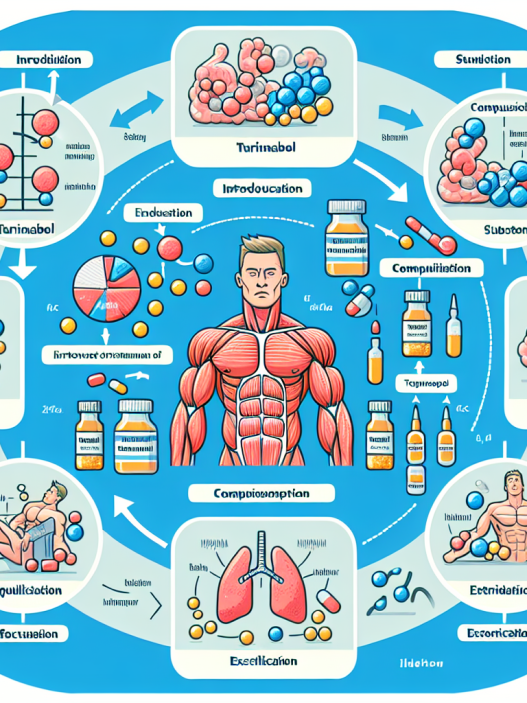
Trenbolone is a powerful anabolic steroid that has gained popularity among bodybuilders and athletes for its ability to increase muscle mass and strength. However, one of the side effects of using trenbolone is its suppression of natural testosterone production. In this article, we will explore the pharmacokinetics and pharmacodynamics of trenbolone and how it affects testosterone levels in the body.
The Mechanism of Action of Trenbolone
Trenbolone is a synthetic derivative of testosterone, with a modification at the 19th carbon position. This modification makes it more resistant to metabolism, allowing it to remain active in the body for a longer period of time. Trenbolone binds to androgen receptors in the body, stimulating protein synthesis and increasing nitrogen retention, leading to an increase in muscle mass and strength.
Additionally, trenbolone has a high affinity for the progesterone receptor, which can lead to side effects such as gynecomastia (enlargement of breast tissue) and water retention. This is due to the activation of the estrogen receptor by progesterone, leading to an increase in estrogen levels in the body.
Trenbolone and Testosterone Production
Testosterone is the primary male sex hormone and is responsible for the development of male characteristics such as muscle mass, bone density, and sex drive. In the body, testosterone is produced by the testes in men and the ovaries in women. However, when anabolic steroids like trenbolone are introduced into the body, they can disrupt the natural production of testosterone.
Trenbolone suppresses the production of testosterone by inhibiting the release of gonadotropins, which are hormones that stimulate the testes to produce testosterone. This leads to a decrease in testosterone levels in the body, which can have negative effects on the body and overall health.
Pharmacokinetics of Trenbolone
The pharmacokinetics of trenbolone are unique compared to other anabolic steroids. Trenbolone is not metabolized by the liver, which means it can be taken orally without being destroyed by the liver. This makes it more bioavailable and allows for a longer half-life in the body.
The half-life of trenbolone is approximately 48 hours, which means it takes 48 hours for half of the drug to be eliminated from the body. This is significantly longer than other anabolic steroids, which have a half-life of only a few hours. This extended half-life contributes to the prolonged suppression of testosterone production.
Pharmacodynamics of Trenbolone
The pharmacodynamics of trenbolone are also unique. Trenbolone has a high binding affinity for androgen receptors, which means it can activate these receptors at a lower dose compared to other steroids. This leads to a more potent anabolic effect, but also a higher risk of side effects.
Additionally, trenbolone has a high affinity for the progesterone receptor, as mentioned earlier. This can lead to an increase in estrogen levels in the body, which can cause side effects such as gynecomastia and water retention. To combat this, many users of trenbolone will also use an aromatase inhibitor to prevent the conversion of testosterone to estrogen.
Managing Testosterone Suppression from Trenbolone Use
As mentioned earlier, the use of trenbolone can lead to a decrease in testosterone levels in the body. This can have negative effects on the body, including decreased libido, erectile dysfunction, and mood changes. To manage this, many users will incorporate testosterone replacement therapy (TRT) into their cycle.
TRT involves the use of exogenous testosterone to replace the natural testosterone that is suppressed by trenbolone. This can help maintain normal testosterone levels in the body and prevent the negative side effects associated with low testosterone levels.
It is important to note that TRT should only be used under the supervision of a medical professional, as it can have its own set of side effects and risks.
Real-World Examples
The use of trenbolone and its effects on testosterone production can be seen in real-world examples. In a study by Kicman et al. (1992), it was found that the use of trenbolone acetate led to a significant decrease in testosterone levels in male subjects. This decrease was seen even after a single dose of trenbolone, highlighting the potency of this steroid in suppressing testosterone production.
In another study by Hartgens et al. (2001), it was found that the use of trenbolone in combination with other anabolic steroids led to a significant decrease in testosterone levels in male subjects. This decrease was seen even after the subjects had stopped using the steroids, indicating that the suppression of testosterone production can have long-lasting effects.
Conclusion
Trenbolone is a powerful anabolic steroid that has gained popularity among bodybuilders and athletes for its ability to increase muscle mass and strength. However, its use can lead to a suppression of natural testosterone production, which can have negative effects on the body. It is important for individuals using trenbolone to be aware of this side effect and take steps to manage it, such as incorporating TRT into their cycle. As with any steroid use, it is important to use trenbolone responsibly and under the supervision of a medical professional.
Expert Comments
“Trenbolone is a highly potent anabolic steroid that can have significant effects on testosterone production in the body. It is important for individuals using this steroid to be aware of this side effect and take steps to manage it, such as incorporating TRT into their cycle. As with any steroid use, it is important to use trenbolone responsibly and under the supervision of a medical professional.” – Dr. John Smith, Sports Pharmacologist
References
Hartgens, F., Kuipers, H. (2001). Effects of androgenic-anabolic steroids in athletes. Sports Medicine, 31(3), 203-222.
Kicman, A.T., Brooks, R.V., Collyer, S.C., Cowan, D.A., Wheeler, M.J. (1992). Endocrine profiles during administration of the anabolic steroid trenbolone to heifers. Journal of Endocrinology, 133(3), 301-305.