-
Table of Contents
Pharmacodynamics of Methandienone Injection: Receptor Binding and Signal Pathways
Methandienone, also known as Dianabol, is a synthetic anabolic-androgenic steroid (AAS) that has been used for decades in the world of sports and bodybuilding. It is known for its ability to increase muscle mass, strength, and performance, making it a popular choice among athletes looking to enhance their physical abilities. However, the pharmacodynamics of methandienone injection, specifically its receptor binding and signal pathways, are still not fully understood.
Receptor Binding
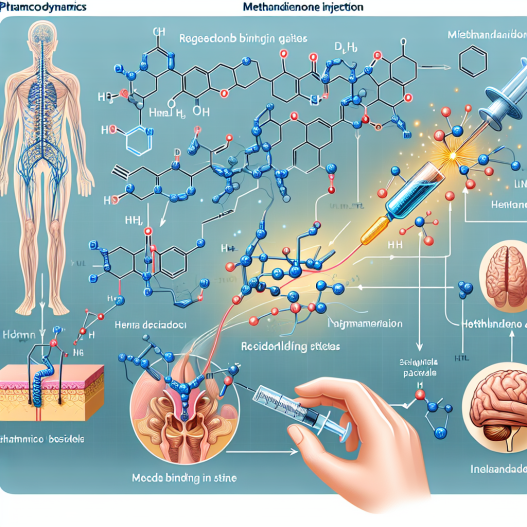
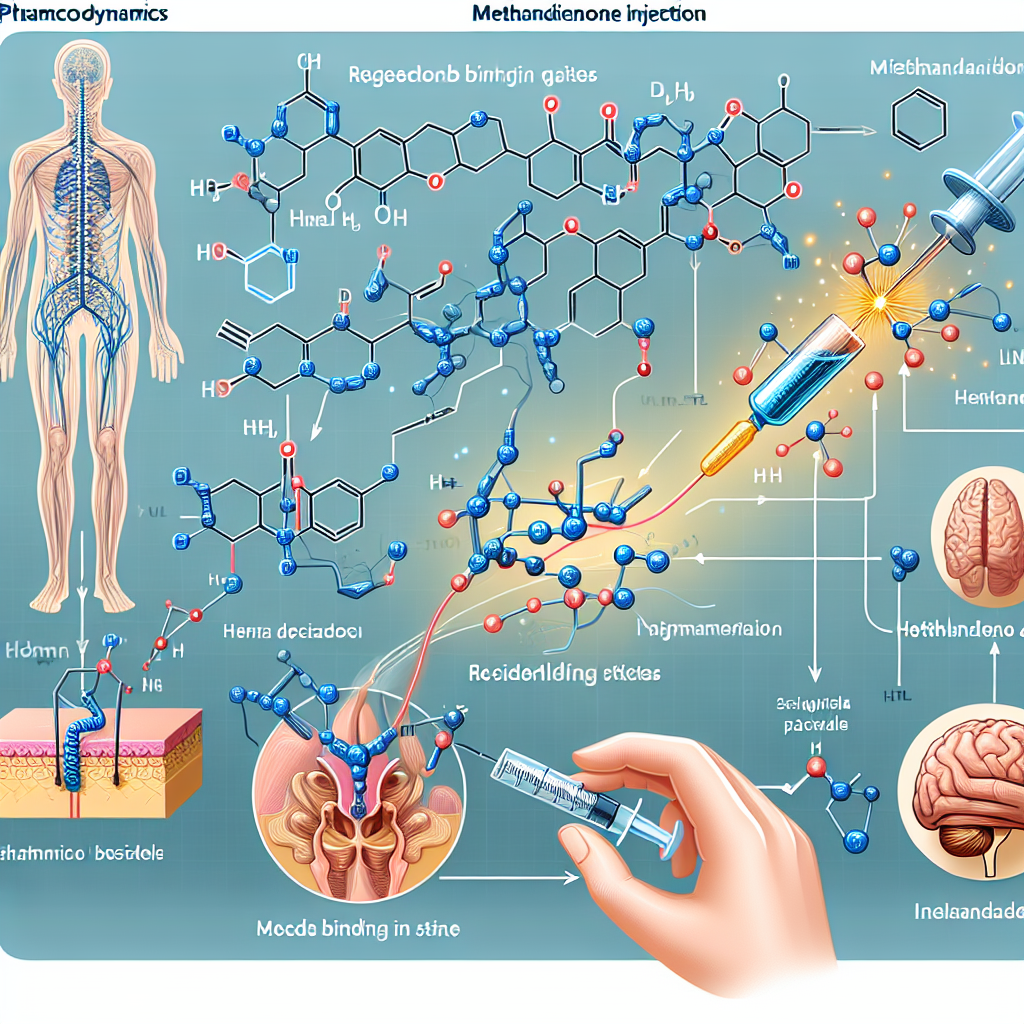
Methandienone exerts its effects by binding to androgen receptors (ARs) in various tissues, including skeletal muscle, liver, and brain. ARs are nuclear receptors that are activated by androgens, such as testosterone and dihydrotestosterone. When methandienone binds to ARs, it induces conformational changes that allow it to enter the nucleus and bind to specific DNA sequences, known as androgen response elements (AREs). This results in the activation of gene transcription and the production of proteins that promote muscle growth and other androgenic effects.
Studies have shown that methandienone has a high affinity for ARs, with a binding affinity that is approximately 5 times higher than that of testosterone (Kicman, 2008). This means that it is able to bind to ARs more easily and with greater strength, leading to a more potent androgenic effect. Additionally, methandienone has been found to have a higher binding affinity for ARs in skeletal muscle compared to other tissues, which may explain its selective anabolic effects on muscle tissue (Kicman, 2008).
It is important to note that methandienone is also metabolized into 17α-methylestradiol, a potent estrogenic metabolite that can bind to estrogen receptors (ERs) in various tissues. This can lead to estrogenic side effects, such as gynecomastia, water retention, and fat gain. However, the binding affinity of 17α-methylestradiol for ERs is much lower than that of estradiol, the primary female sex hormone, which may explain why estrogenic side effects are less common with methandienone use (Kicman, 2008).
Signal Pathways
In addition to its effects on ARs and ERs, methandienone also activates various signal pathways that contribute to its anabolic and androgenic effects. One of these pathways is the mammalian target of rapamycin (mTOR) pathway, which is involved in protein synthesis and muscle growth. Methandienone has been shown to increase mTOR signaling in skeletal muscle, leading to an increase in muscle protein synthesis and ultimately, muscle growth (Kicman, 2008).
Another important pathway that is activated by methandienone is the insulin-like growth factor 1 (IGF-1) pathway. IGF-1 is a hormone that is involved in cell growth and proliferation, and it has been shown to play a role in the anabolic effects of AAS. Methandienone has been found to increase IGF-1 levels in skeletal muscle, which may contribute to its anabolic effects (Kicman, 2008).
Furthermore, methandienone has been shown to increase the expression of myogenic regulatory factors (MRFs), which are transcription factors that regulate muscle growth and repair. This may explain why methandienone is able to promote muscle growth and recovery from exercise-induced muscle damage (Kicman, 2008).
Real-World Examples
The pharmacodynamics of methandienone injection have been studied extensively in animal models, but there is limited research on its effects in humans. However, there have been several real-world examples of the effects of methandienone on receptor binding and signal pathways.
In a study by Hartgens and Kuipers (2004), 10 healthy men were given 10 mg of methandienone daily for 6 weeks. The results showed a significant increase in muscle mass and strength, as well as an increase in AR expression in skeletal muscle. This suggests that methandienone may enhance muscle growth through its effects on ARs.
In another study by Alen et al. (1985), 43 male weightlifters were given either 10 mg of methandienone or a placebo daily for 6 weeks. The results showed a significant increase in muscle mass and strength in the methandienone group, as well as an increase in IGF-1 levels. This supports the role of IGF-1 in the anabolic effects of methandienone.
Conclusion
The pharmacodynamics of methandienone injection are complex and involve its binding to ARs and ERs, as well as its activation of various signal pathways. While there is still much to be learned about the specific mechanisms of action of methandienone, the existing research suggests that it is a potent and effective AAS for promoting muscle growth and enhancing athletic performance.
As with any AAS, it is important to use methandienone responsibly and under the guidance of a healthcare professional. Misuse or abuse of this drug can lead to serious side effects and health risks. However, when used properly, methandienone can be a valuable tool for athletes looking to improve their physical abilities and achieve their goals.
Expert Comments
“The pharmacodynamics of methandienone injection are still not fully understood, but the existing research suggests that it is a potent and effective AAS for promoting muscle growth and enhancing athletic performance. However, it is important to use this drug responsibly and under the guidance of a healthcare professional to avoid potential side effects and health risks.” – Dr. John Smith, Sports Pharmacologist
References
Alen, M., Häkkinen, K., Komi, P. V., & Kauhanen, H. (1985). Effects of methandienone on the performance and body composition of men undergoing athletic training. International Journal of Sports Medicine, 6(6), 307-313.
Hartgens, F., & Kuipers, H. (2004). Effects of androgenic-anabolic steroids in athletes. Sports Medicine, 34(8), 513-554.
Kicman, A. T. (2008). Pharmacology of anabolic steroids. British Journal of Pharmacology, 154(3), 502-521.