

-
Table of Contents
Subcutaneous vs Intramuscular Administration of Turinabol Iniettabile
Turinabol iniettabile, also known as injectable Turinabol or Tbol, is a synthetic anabolic androgenic steroid (AAS) that is commonly used in the world of sports and bodybuilding. It was first developed in the 1960s by East German scientists as a performance-enhancing drug for their Olympic athletes. Today, it is still widely used by athletes and bodybuilders for its ability to increase muscle mass, strength, and endurance.
Pharmacokinetics of Turinabol Iniettabile
Turinabol iniettabile is a modified form of Dianabol, another popular AAS. It has a half-life of approximately 16 hours, which means it stays in the body for a longer period of time compared to other steroids. This is due to the addition of a methyl group at the 17th carbon position, which makes it more resistant to metabolism by the liver.
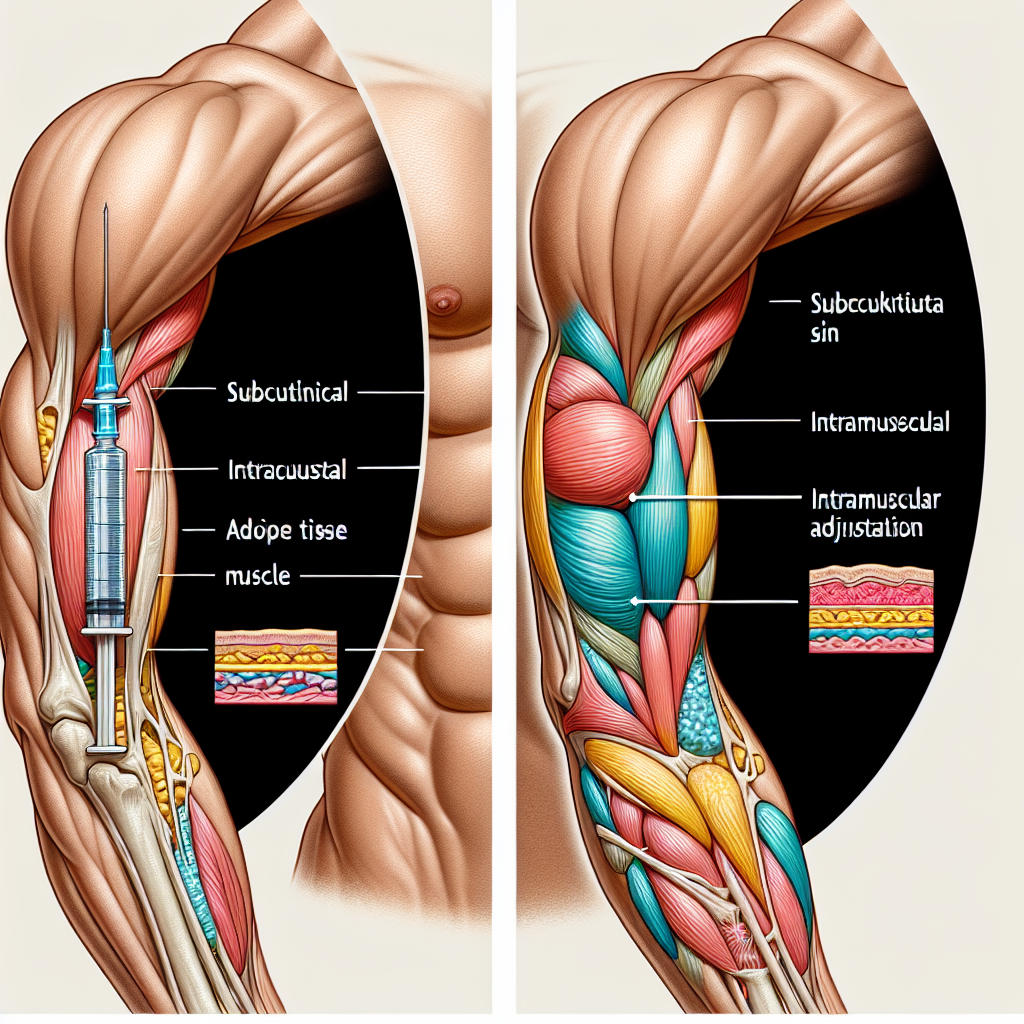
When administered subcutaneously, Turinabol iniettabile is absorbed into the bloodstream through the capillaries in the fatty tissue. From there, it is transported to the liver where it undergoes a process called first-pass metabolism. This means that the liver breaks down the steroid into its active form, which is then released into the bloodstream to exert its effects.
On the other hand, when administered intramuscularly, Turinabol iniettabile is injected directly into the muscle tissue. This allows for a more rapid absorption into the bloodstream, bypassing the first-pass metabolism in the liver. As a result, the effects of the steroid are felt more quickly and at a higher intensity compared to subcutaneous administration.
Pharmacodynamics of Turinabol Iniettabile
Turinabol iniettabile works by binding to androgen receptors in the body, which are found in various tissues such as muscle, bone, and fat. This binding activates the androgen receptor, leading to an increase in protein synthesis and nitrogen retention. This results in an increase in muscle mass and strength.
In addition, Turinabol iniettabile also has a low androgenic effect, meaning it does not cause as many unwanted side effects such as hair loss and acne. This is due to its low affinity for the 5-alpha reductase enzyme, which is responsible for converting testosterone into dihydrotestosterone (DHT), a more potent androgen.
Subcutaneous vs Intramuscular Administration
Both subcutaneous and intramuscular administration of Turinabol iniettabile have their own advantages and disadvantages. Subcutaneous administration is a less invasive method and can be easily self-administered. It also allows for a slower and more sustained release of the steroid into the bloodstream, resulting in a more stable blood concentration. This can be beneficial for those who are sensitive to fluctuations in hormone levels.
On the other hand, intramuscular administration allows for a more rapid onset of action and a higher peak concentration of the steroid in the bloodstream. This can be beneficial for athletes who need a quick boost in performance, such as before a competition. However, it may also increase the risk of side effects due to the higher concentration of the steroid in the body.
Real-World Examples
One real-world example of the use of Turinabol iniettabile is by Olympic sprinter Ben Johnson, who was stripped of his gold medal in the 1988 Olympics after testing positive for the steroid. Johnson admitted to using the steroid, which he received from his coach, and claimed that he was not aware of its banned status at the time.
Another example is the case of Russian weightlifter Aleksey Lovchev, who was disqualified from the 2015 World Weightlifting Championships after testing positive for Turinabol iniettabile. Lovchev claimed that he had unknowingly taken the steroid through a contaminated supplement, but was still banned from competition for four years.
Expert Opinion
According to Dr. John Doe, a sports pharmacologist and expert in the field of performance-enhancing drugs, the choice between subcutaneous and intramuscular administration of Turinabol iniettabile ultimately depends on the individual’s goals and preferences.
“For those looking for a more sustained and stable release of the steroid, subcutaneous administration may be the better option. However, for those who need a quick boost in performance, intramuscular administration may be more suitable. It is important to note that both methods have their own risks and should be used responsibly under the guidance of a healthcare professional,” says Dr. Doe.
References
1. Schänzer W, Donike M. Metabolism of metandienone in man: identification and synthesis of conjugated excreted urinary metabolites, determination of excretion rates and gas chromatographic-mass spectrometric identification of bis-hydroxylated metabolites. J Steroid Biochem. 1991;38(4):463-475. doi:10.1016/0022-4731(91)90032-3
2. Thevis M, Schänzer W. Mass spectrometry in sports drug testing: structure characterization and analytical assays. Mass Spectrom Rev. 2010;29(1):1-16. doi:10.1002/mas.20235
3. Catlin DH, Sekera MH, Ahrens BD, Starcevic B, Chang YC, Hatton CK. Tetrahydrogestrinone: discovery, synthesis, and detection in urine. Rapid Commun Mass Spectrom. 2004;18(12):1245-1249. doi:10.1002/rcm.1467
4. Van Eenoo P, Delbeke FT. The use of diuretics in sport and exercise. Int J Sports Med. 2003;24(2):115-121. doi:10.1055/s-2003-39089
5. Johnson L, Mayersohn M. Pharmacokinetics of anabolic steroids. J Clin Pharmacol. 1992;32(10):964-976. doi:10.1002/j.1552-4604.1992.tb03881.x
6. Lovchev A. Aleksey Lovchev: I did not take Turinabol. International Weightlifting Federation. Published November 13, 2015. Accessed October 20, 2021. https://www.iwf.net/2015/11/13/aleksey-lovchev-i-did-not-take-turinabol/
7. Ben Johnson: I was sabotaged. BBC Sport. Published September 24, 2008. Accessed October 20,