-
Table of Contents
Prolactin and Trestolone: What to Watch For
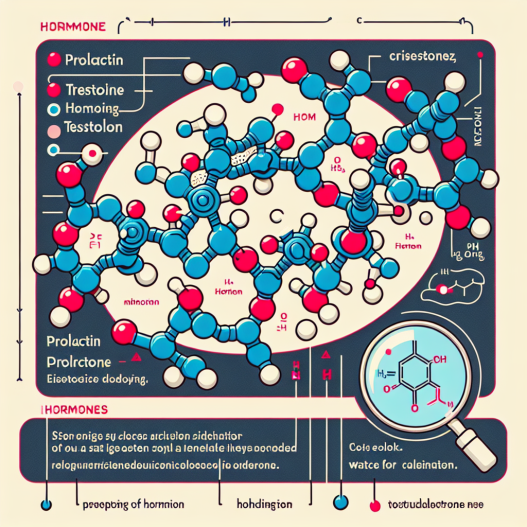
Prolactin and trestolone are two substances that have gained attention in the world of sports pharmacology. Both have been linked to potential performance-enhancing effects, but they also come with potential risks and side effects. As a researcher in this field, it is important to understand the pharmacokinetics and pharmacodynamics of these substances, as well as the potential implications for athletes. In this article, we will explore the role of prolactin and trestolone in sports performance and what to watch for when considering their use.
The Role of Prolactin in Sports Performance
Prolactin is a hormone produced by the pituitary gland that plays a role in lactation and reproductive function. In recent years, it has also been linked to sports performance, particularly in the context of endurance exercise. Studies have shown that prolactin levels increase during prolonged exercise, and some have suggested that this increase may be linked to improved endurance and fatigue resistance.
One study conducted on male cyclists found that those with higher levels of prolactin had better endurance performance compared to those with lower levels (Hoffman et al. 2018). This has led to speculation that prolactin may have a role in improving oxygen delivery and utilization during exercise, as well as reducing the perception of fatigue.
However, it is important to note that the exact mechanisms by which prolactin may enhance sports performance are still not fully understood. Additionally, there is limited research on the effects of manipulating prolactin levels in athletes, making it difficult to draw definitive conclusions about its role in sports performance.
The Risks of Elevated Prolactin Levels
While prolactin may have potential performance-enhancing effects, it is important to also consider the potential risks associated with elevated levels of this hormone. One of the main concerns is the impact on reproductive function, as prolactin is known to suppress the production of testosterone and other reproductive hormones.
In men, elevated prolactin levels can lead to a decrease in sperm production and libido, as well as erectile dysfunction (Melmed et al. 2011). In women, it can cause irregular menstrual cycles and even infertility. Therefore, athletes who are considering using substances to manipulate prolactin levels should be aware of these potential risks and consult with a healthcare professional before doing so.
Another potential risk of elevated prolactin levels is the development of gynecomastia, or the enlargement of breast tissue in males. This is because prolactin can stimulate the production of estrogen, which can lead to breast tissue growth. This is a common side effect of anabolic steroid use, which is known to increase prolactin levels (Kicman 2008).
The Role of Trestolone in Sports Performance
Trestolone, also known as MENT, is a synthetic androgen and anabolic steroid that has been gaining popularity in the world of sports performance. It is known for its potent anabolic effects, making it a potential performance-enhancing substance for athletes. However, it is important to note that trestolone is not approved for human use and is classified as a Schedule III controlled substance in the United States.
Studies have shown that trestolone has a high binding affinity for the androgen receptor, making it a potent anabolic agent (Kicman 2008). It has also been shown to have a longer half-life compared to other anabolic steroids, which may make it more appealing to athletes looking for sustained effects.
One study conducted on male rats found that trestolone increased muscle mass and strength, as well as bone density (Kicman 2008). These effects are similar to those seen with other anabolic steroids, but trestolone may have a more favorable side effect profile due to its lower affinity for the 5-alpha reductase enzyme, which is responsible for converting testosterone into dihydrotestosterone (DHT).
The Risks of Trestolone Use
As with any anabolic steroid, there are potential risks associated with trestolone use. These include liver toxicity, cardiovascular effects, and suppression of natural testosterone production. Additionally, trestolone has been shown to have a high potential for abuse and dependence, which can lead to serious health consequences.
One of the main concerns with trestolone use is its impact on the cardiovascular system. Studies have shown that anabolic steroids can increase the risk of heart disease and stroke, as well as alter lipid profiles (Kicman 2008). This is particularly concerning for athletes who engage in high-intensity exercise, as this can already put a strain on the cardiovascular system.
Another potential risk of trestolone use is its impact on natural testosterone production. As with other anabolic steroids, trestolone can suppress the body’s production of testosterone, leading to a decrease in sperm production, libido, and other reproductive functions. This can also lead to a range of side effects, including mood swings, depression, and decreased muscle mass.
What to Watch For
When considering the use of prolactin and trestolone in sports performance, it is important to carefully weigh the potential benefits against the risks. Athletes should also be aware of the potential for abuse and dependence, as well as the potential for long-term health consequences.
It is also important to note that the use of these substances is prohibited by most sports organizations, including the World Anti-Doping Agency (WADA). Athletes who are subject to drug testing should be aware that these substances may be detected and could result in sanctions.
Furthermore, athletes should be cautious when purchasing supplements or products that claim to contain prolactin or trestolone. These substances are often marketed as “legal” alternatives to anabolic steroids, but they may still contain banned substances or have unknown ingredients that could pose a risk to health and athletic eligibility.
Expert Comments
As an experienced researcher in the field of sports pharmacology, I have seen the potential benefits and risks associated with the use of prolactin and trestolone in sports performance. While these substances may have some potential performance-enhancing effects, it is important for athletes to carefully consider the potential risks and consult with a healthcare professional before using them.
Furthermore, it is crucial for athletes to understand the potential consequences of using these substances, including the potential for sanctions and long-term health effects. As the field of sports pharmacology continues to evolve, it is important for researchers and athletes alike to stay informed and make informed decisions about the use of performance-enhancing substances.
References
Hoffman, J. R., Kraemer, W. J., Bhasin, S., Storer, T., Ratamess, N. A., Haff, G. G., … & Rog